
The Importance of the Family Altar
1. What Is the Family Altar?
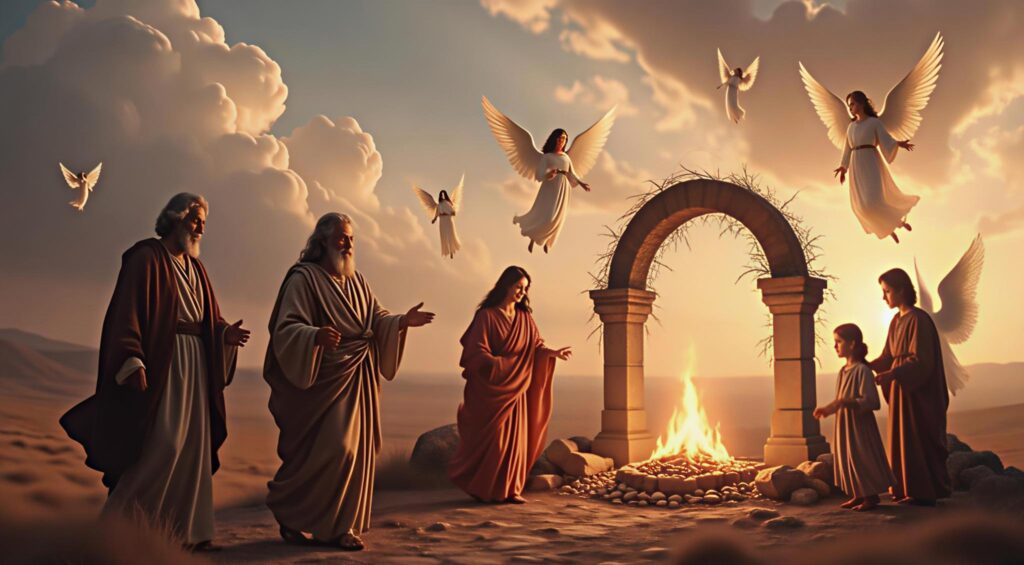
A “family altar” refers to a dedicated time when a household—or spiritual partners—gather daily to worship God, read His Word, pray, and seek His presence together. It is not a physical altar made of stone, but a spiritual practice that establishes God’s presence at the center of family life.
2. The Biblical Foundation for Family Worship
God desires that His people remember Him daily, not only in individual devotion but also in their homes.
“These commandments that I give you today are to be on your hearts. Impress them on your children. Talk about them when you sit at home and when you walk along the road, when you lie down and when you get up.”
(Deuteronomy 6:6–7, NIV)
Here, God commands families to teach His Word continually in the home. The family altar is one of the most practical ways to obey this.
Jesus also promised His presence whenever believers gather together:
“For where two or three gather in my name, there am I with them.”
(Matthew 18:20, NIV)
Daily worship as a family or with spiritual partners opens the door to experiencing the abiding presence of God.
3. Why the Family Altar Is Important
- Invites God’s Presence into the Home
Worship and prayer create an atmosphere of God’s presence in the household. - Builds Unity and Spiritual Strength
Families or partners who pray together grow in love, unity, and shared vision. - Protects Against Spiritual Attack
The family altar becomes a place of spiritual covering, where God’s Word and prayer guard against temptation and division. - Passes Faith to the Next Generation
Children learn to fear the Lord and walk in His ways by seeing daily devotion modeled at home. - Deepens Intimacy with God
As believers worship together daily, they learn to enter deeply into God’s presence and cultivate a lifestyle of communion with Him.
4. Biblical Case Studies
Case Study 1: Abraham Building Altars (Genesis 12–13)
Wherever Abraham went, he built an altar and called on the name of the Lord (Genesis 12:7–8; 13:18). These altars became places of worship, remembrance, and encounter with God.
- Application: Just as Abraham built altars in his journey, families today are called to “build” spiritual altars in their homes by daily devotion and worship.
Case Study 2: Joshua’s Family Commitment (Joshua 24)
At the end of his leadership, Joshua declared:
“But as for me and my household, we will serve the LORD.”
(Joshua 24:15, NIV)
Joshua publicly committed not only himself but also his household to serve the Lord. His declaration reflects the principle of the family altar—leading one’s family into daily worship and devotion.
5. Entering Deeply into God’s Presence Together
The family altar is more than just reading and praying; it is about encountering God’s presence together. This means slowing down, worshiping with sincerity, listening to the Spirit, and allowing God’s Word to shape the family’s heart.
David expressed this desire beautifully:
“One thing I ask from the LORD, this only do I seek: that I may dwell in the house of the LORD all the days of my life, to gaze on the beauty of the LORD and to seek him in his temple.”
(Psalm 27:4, NIV)
When a family or spiritual partners create daily space for worship, they build a “dwelling place” for God’s presence in their midst.
6. Conclusion
The family altar is essential for cultivating God’s presence, transmitting faith, and building spiritual strength in households and among believers. It is the daily place where God meets His people, transforms their hearts, and unites them in His Spirit.
By following the examples of Abraham and Joshua, and by obeying God’s call to teach His Word daily, families today can establish altars of worship where heaven touches earth.
“The LORD inhabits the praises of His people.”
(Psalm 22:3, KJV)



Add comment